

A corporate headquarters relocation affects far more than desks and boxes. It can involve executive offices, multiple business units, technology infrastructure, confidential records, specialized furniture, brand environments and hundreds of employees. In New York City, the project must also fit strict building rules and limited service-elevator schedules.
A structured twelve-month plan gives leadership enough time to make decisions, coordinate vendors and reduce operational risk. Use this corporate headquarters relocation checklist as a framework, then adjust each milestone to your lease, construction schedule and business requirements.
12 Months Before: Establish Governance and Scope
Begin by naming an executive sponsor and a day-to-day relocation leader. Build a working group that represents facilities, operations, finance, IT, security, human resources, communications and department leadership.
Define the scope in measurable terms:
- Locations, floors and employee headcount
- Target occupancy date and lease deadlines
- Furniture, technology, files and specialty assets
- Departments that cannot experience downtime
- Budget approval and change-control responsibilities
- Items requiring storage, liquidation or special handling
Bring an experienced relocation project-management team into the process early enough to identify dependencies that may not appear on the construction schedule.
9 to 12 Months Before: Survey Both Locations
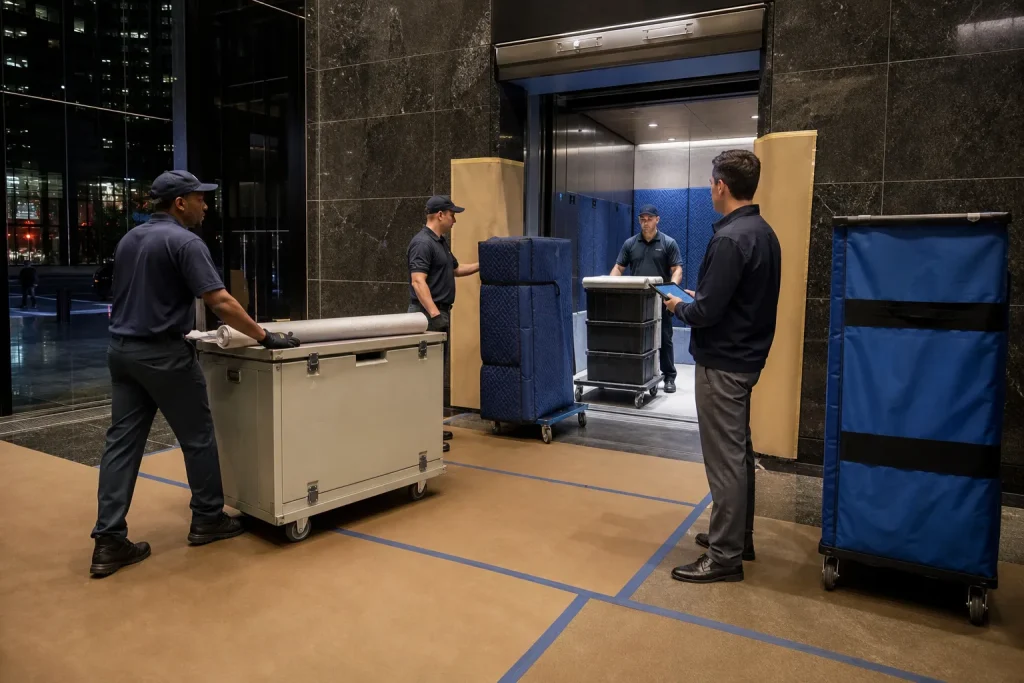
Walk the origin and destination with building management and key vendors. Document loading docks, freight elevators, service corridors, access credentials, floor-loading restrictions and required protection.
Confirm whether either building restricts moving to evenings or weekends. Request the certificate-of-insurance requirements in writing and identify approval deadlines.
6 to 9 Months Before: Build the Inventory and Disposition Plan
Create a complete asset inventory. Furniture plans should distinguish between existing items that will move, new furniture scheduled for installation and assets that will be stored or removed.
This is also the right time to identify obsolete furniture and equipment. Eagle Transfer can coordinate office liquidation alongside moving and storage so unwanted items do not consume labor or space at the new headquarters.
6 Months Before: Create the Master Relocation Schedule
The master schedule should connect construction, furniture delivery, technology readiness, building access, packing, employee communication and physical moving phases. Each task needs an owner, deadline and dependency.
Include contingency time. Construction delays, elevator changes and vendor lead times can affect the move even when the physical relocation plan is ready.
Choose the Move Sequence
Determine whether the headquarters will relocate in one major event or in phases. Large organizations often move support departments first, maintain critical teams temporarily at the origin and transition executive or client-facing functions after the destination is tested.
4 to 6 Months Before: Finalize Technology Planning
IT should verify power, network capacity, telecom services, server-room readiness and conference-room systems at the new location. Create inventories and destination assignments for computers, monitors, printers, phones and shared equipment.
Document the shutdown and restart sequence, backup requirements and testing responsibilities. Coordinate sensitive equipment with Eagle Transfer’s technology relocation team.
3 to 4 Months Before: Confirm Logistics and Vendors
By this point, the moving schedule, crew plan, elevator reservations and vehicle sequence should be taking final form. Confirm all outside vendors, including furniture installers, low-voltage teams, security providers, shredding services and specialty handlers.
If construction and lease dates do not align, arrange secure commercial storage. A managed storage plan can receive furniture early, hold reusable assets and support staged deliveries by floor or department.
8 to 12 Weeks Before: Communicate with Employees
Employees should receive the move date, new-office address, transportation information, packing responsibilities and key deadlines. Department coordinators can answer local questions and confirm special needs.
Provide clear instructions for personal belongings, confidential materials, equipment labels and items that should not be packed. Communication should become more frequent as the move approaches.
4 to 8 Weeks Before: Finalize Labels and Floor Plans
Freeze the destination plan as much as possible. Assign each office, workstation, conference room and storage area a unique code. Apply the same coding system to furniture, equipment, cartons and destination signage.
Distribute final plans only through an agreed document-control process so crews and vendors do not work from different revisions.
1 to 4 Weeks Before: Complete Readiness Reviews
Walk the destination with facilities, IT, construction and the move project manager. Verify life-safety access, elevators, lighting, power, network service, furniture placement and protective materials.
At the origin, confirm packing progress and remove anything that is not part of the final move. Reconfirm building access, security lists and emergency contacts.
Move Weekend: Use a Clear Command Structure
One person should control operational changes, with designated contacts for the origin, destination, IT and each building. Track progress by phase and document exceptions rather than relying on informal conversations.
Before a department is released for occupancy, verify workstation placement, technology, shared spaces and safe access paths.
First Week After: Stabilize and Close Out
Maintain a central issue list for missing items, placement adjustments and technology questions. Prioritize issues that affect employee productivity or client service.
Complete final inventories, retrieve reusable packing materials and conduct a closeout walkthrough at the former headquarters. Confirm that landlord requirements have been satisfied.
Corporate Headquarters Relocation Checklist
- Executive sponsor and relocation leader assigned
- Scope, budget, decision rights and move date approved
- Origin and destination surveys completed
- COI and building requirements documented
- Asset inventory and disposition plan finalized
- Construction, furniture, IT and move schedules integrated
- Storage and liquidation requirements confirmed
- Employee communication plan launched
- Destination codes and labels approved
- Readiness walkthrough completed
- Move command structure and escalation contacts confirmed
- Post-move support and closeout scheduled
Frequently Asked Questions
How early should a headquarters relocation be planned?
Large headquarters moves commonly benefit from nine to twelve months of planning. Projects involving construction, multiple locations or complex technology may require even more lead time.
Who should lead a corporate relocation?
An internal relocation leader should own business decisions, supported by an executive sponsor and representatives from facilities, IT, operations, HR, security and communications. A professional move project manager coordinates the physical relocation.
Can headquarters relocations be completed after hours?
Yes. Many NYC headquarters moves are scheduled during evenings and weekends because commercial buildings restrict freight-elevator and loading-dock use during business hours.
What happens if the new headquarters is not ready?
Managed commercial storage can hold furniture, equipment and other assets until construction or technology work is complete. Deliveries can then be staged according to the revised occupancy plan.
Coordinate Your Headquarters Relocation with Eagle Transfer
Since 1974, Eagle Transfer has helped New York organizations plan and execute complex commercial moves. Our integrated services include project management, packing, transportation, technology relocation, furniture installation, storage and liquidation.
Contact Eagle Transfer to begin building a headquarters relocation plan around your locations, workforce and operational timeline.