 Skip to content
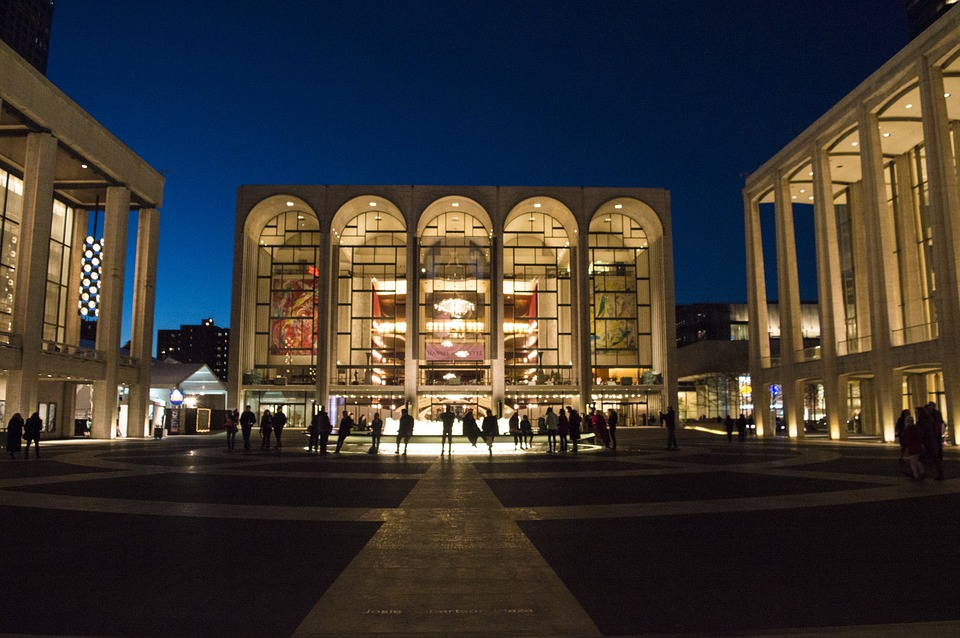

The world’s largest performing arts center, Lincoln Center has been one of New York City’s cultural touchstones for decades. Situated in the Upper West Side of Manhattan not far from Midtown, Lincoln Center proudly holds a number of internationally acclaimed performing arts organizations based in the city, including the Metropolitan Opera, the New York Philharmonic and the New York City Ballet. Few people really know just how this premier cultural complex was built and how it developed over the years. Here’s just a quick look at the hidden history of Lincoln Center.
The genesis of the complex dates back to shortly after World War II when a group of wealthy civic-minded leaders spearheaded by John D. Rockefeller III planned to construct a new cultural complex in the Upper West Side’s Lincoln Square as part of a broader urban renewal effort underway in the city. The area was officially designated for urban renewal in 1955 and Rockefeller was named the inaugural chairman of the project in 1956, leading the charge for fundraising and enlisting the top architects available for the ambitious project. It was eventually decided that a large complex encompassing multiple facilities with enough space for many of the city’s flagship cultural organizations would be best suited for the project. Groundbreaking occurred on May 14, 1959 with a ceremony attended by President Eisenhower, attesting the importance of the new cultural arts hub.
Rockefeller later became chairman of the center in 1961 and on September 23, 1962, the complex’s first performance hub, Philharmonic Hall, opened with great fanfare. Two of the other main performing arts halls, the New York State Theater and the Metropolitan Opera House, opened to the public in 1964 and 1966 respectively. In 1969, the acclaimed Julliard School opened its new home at the center, helping to solidify its status as one of the world’s leading performing arts conservancies. By the end of the 1960s, the cultural complex had been largely completed.
In 1999, the complex announced a large-scale modernization effort. British architect Norman Foster was selected to lead the redevelopment in 2005 and helped to usher in a number of new and renovated buildings at the complex, including the opening of the Claire Tow Theater in 2012 and renovations of Alice Tully Hall and the center’s main plaza. The popular Jazz at Lincoln Center venue, housed nearby at the Time Warner Center, opened in 2004 as well.
For generations, Lincoln Center has stood as one of New York City’s premier cultural hubs. As the home of many of the city’s leading performing arts organizations, its left an indelible imprint on the New York City’s rich cultural history.
